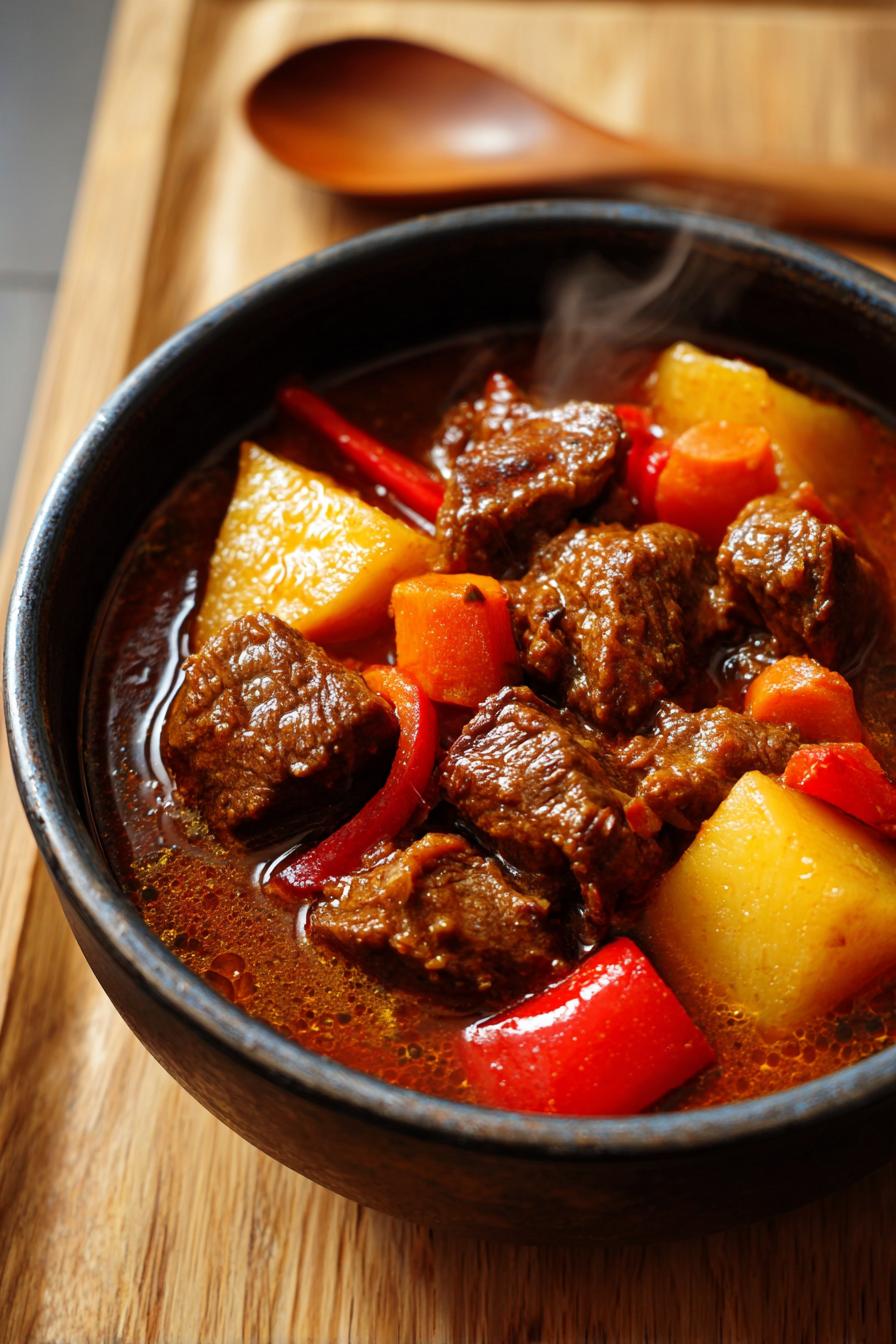
How To Make German Goulash That Melts in Your Mouth
Let me tell you about my absolute favorite cold-weather dish – how to make German goulash that’ll warm you from the inside out. I first fell in love with this hearty stew during a snowy Christmas market visit to Munich, where the steaming bowls of tender beef swimming in rich, paprika-spiced broth made me forget all about the freezing temperatures. Now I make this comforting classic at home whenever I need a taste of that cozy German hospitality. The secret? Taking your time to let those rustic flavors develop – trust me, the wait is so worth it when that first spoonful of melt-in-your-mouth beef hits your tongue.
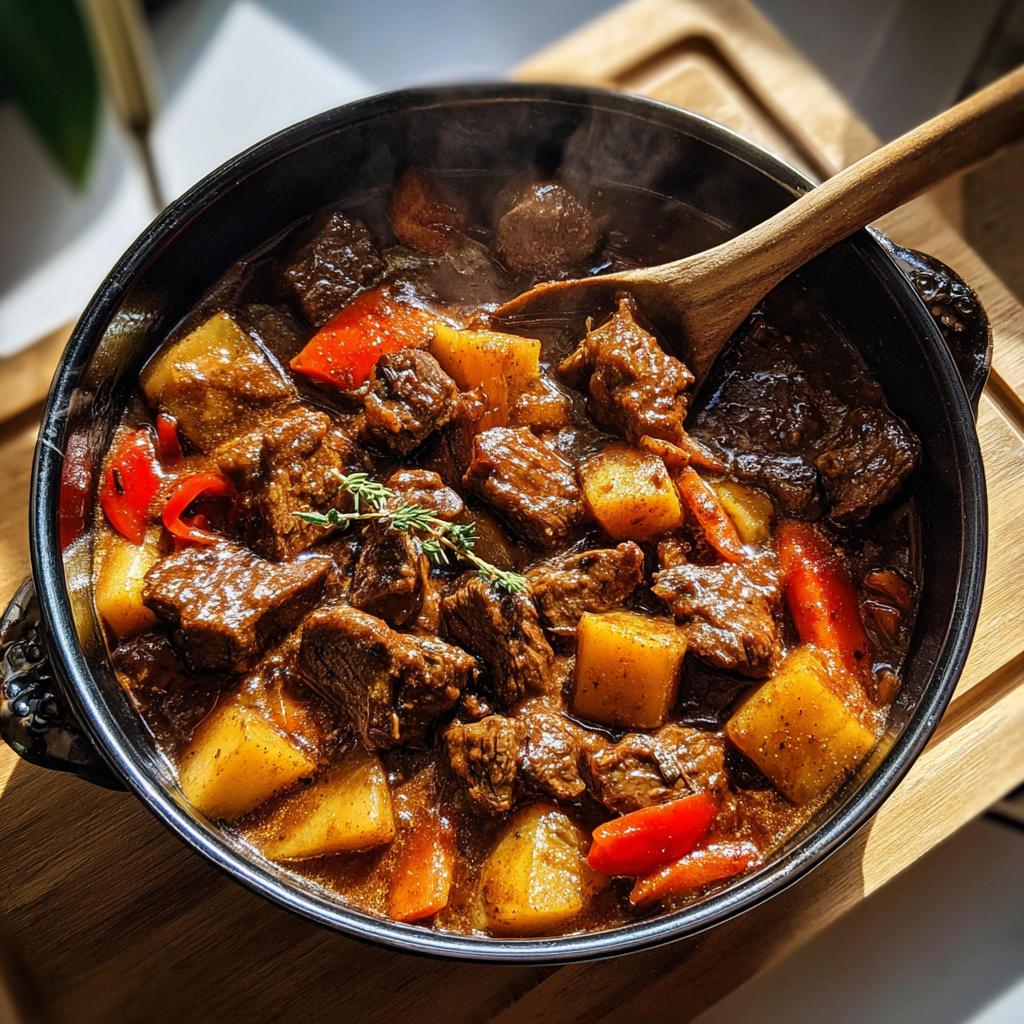
Why You’ll Love This German Goulash
There’s a reason this dish has been warming German kitchens for generations—and once you try it, you’ll understand why. Let me count the ways you’ll become obsessed:
- That rich, deep flavor: The magic combo of sweet paprika and earthy caraway seeds creates a broth that’s downright addictive. I always sneak spoonfuls while it simmers.
- Fork-tender beef: Chuck cubes transform into melt-in-your-mouth morsels after hours of gentle simmering. No knife required!
- One-pot wonder: Everything cooks together beautifully—less cleanup means more time enjoying those cozy stew vibes.
- Better the next day: Like all great stews, the flavors deepen overnight. I purposely make extra for leftovers (they never last long).
Honestly? Your kitchen will smell like a Bavarian grandmother’s cottage by the time this is done. Pure comfort in a bowl.
The Must-Have Ingredients for Authentic German Goulash
Okay, let’s talk ingredients – because using the right stuff makes all the difference between good goulash and oh-my-goodness goulash. Here’s exactly what you’ll need (and why each one matters):
- 2 lbs beef chuck, cubed: Chuck’s marbling melts into pure tenderness during the long cook. Don’t skimp here – I learned the hard way that lean cuts turn tough!
- 2 onions, chopped: These sweeten beautifully as they cook down. I like mine in medium dice – big enough to notice, small enough to blend into the sauce.
- 2 cloves garlic, minced: Fresh is best – that pre-minced jarred stuff just doesn’t give the same aromatic punch.
- 2 tbsp paprika: The soul of goulash! Splurge on Hungarian sweet paprika if you can – its vibrant color and flavor beat the bland grocery store stuff.
- 1 tbsp caraway seeds: These little guys add that distinctive earthy note. Crush them lightly between your fingers to release more flavor.
- 1 red bell pepper, diced: Adds sweetness and color. Sometimes I’ll throw in half a green pepper too for extra depth.
- 2 carrots, sliced: About 1/4-inch thick so they soften perfectly without disappearing.
- 2 potatoes, cubed: Yukon Golds are my favorite – they hold their shape but get creamy inside.
- 4 cups beef broth: Homemade if you’ve got it, but a good low-sodium store brand works too.
- 2 tbsp tomato paste: That concentrated umami boost makes all the difference.
- 2 tbsp vegetable oil: For browning – neutral flavor lets the other ingredients shine.
- Salt and pepper to taste: Season as you go – I always do a taste test before serving.
See? Nothing too fancy, just quality ingredients treated right. Now let’s get cooking!
How To Make German Goulash
Alright, let’s roll up our sleeves and make some magic happen! This is where the transformation from simple ingredients to glorious goulash occurs. Follow these steps closely, and you’ll be rewarded with the most comforting bowl of stew you’ve ever tasted.
Browning the Beef
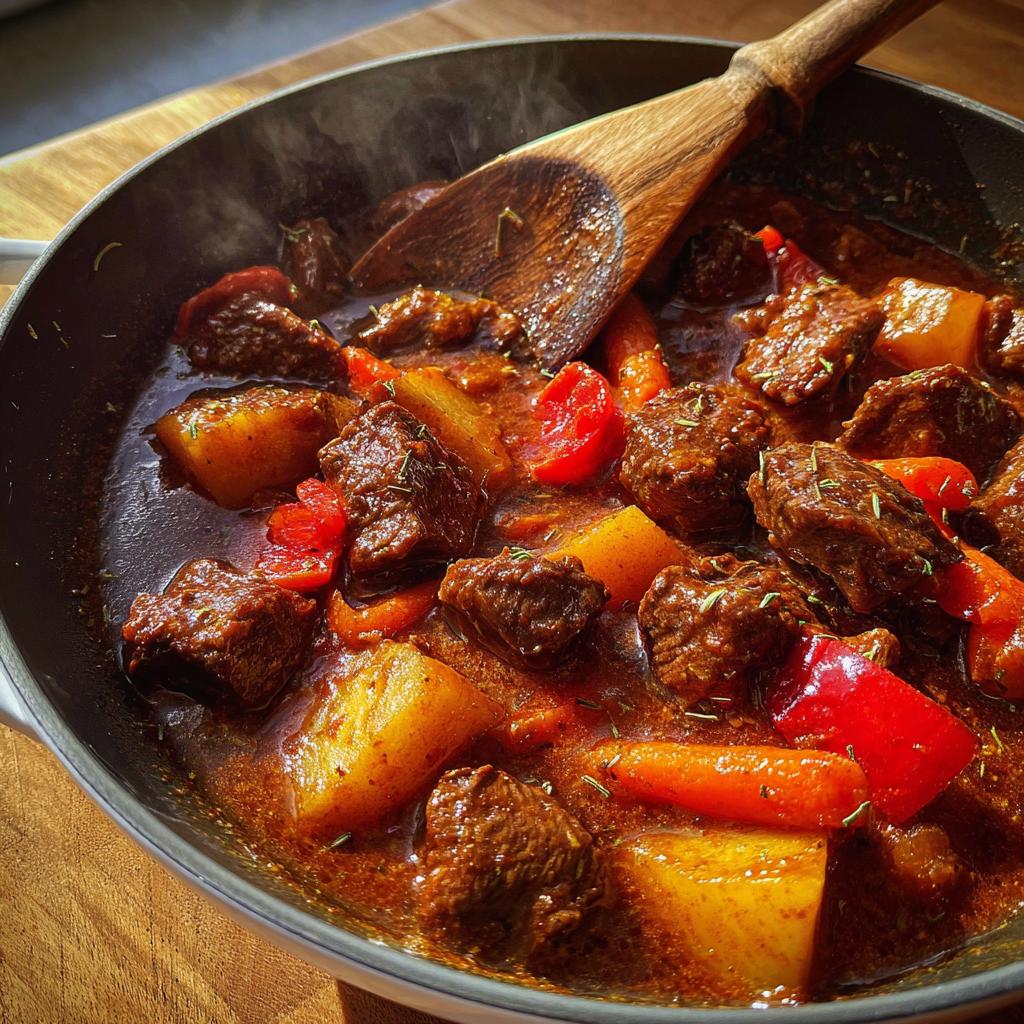
First rule of goulash club: don’t rush the browning! Heat your oil in a heavy pot (I swear by my enameled Dutch oven) over medium-high heat. Working in batches is crucial here – overcrowding the pan steams the meat instead of browning it. I do about a third of the beef at a time, turning each cube until it develops a deep caramel crust on all sides. Those browned bits stuck to the pot? That’s pure flavor gold – we’ll get to those later!
Sautéing the Aromatics
Once all the beef is browned and set aside, turn the heat down to medium. Now toss in those chopped onions – they should sizzle gently. Stir occasionally until they turn translucent and just start taking on a golden hue, about 5 minutes. Add the garlic and stir for 30 seconds until fragrant (but don’t let it burn!). This is when your kitchen starts smelling absolutely incredible.
Simmering to Perfection
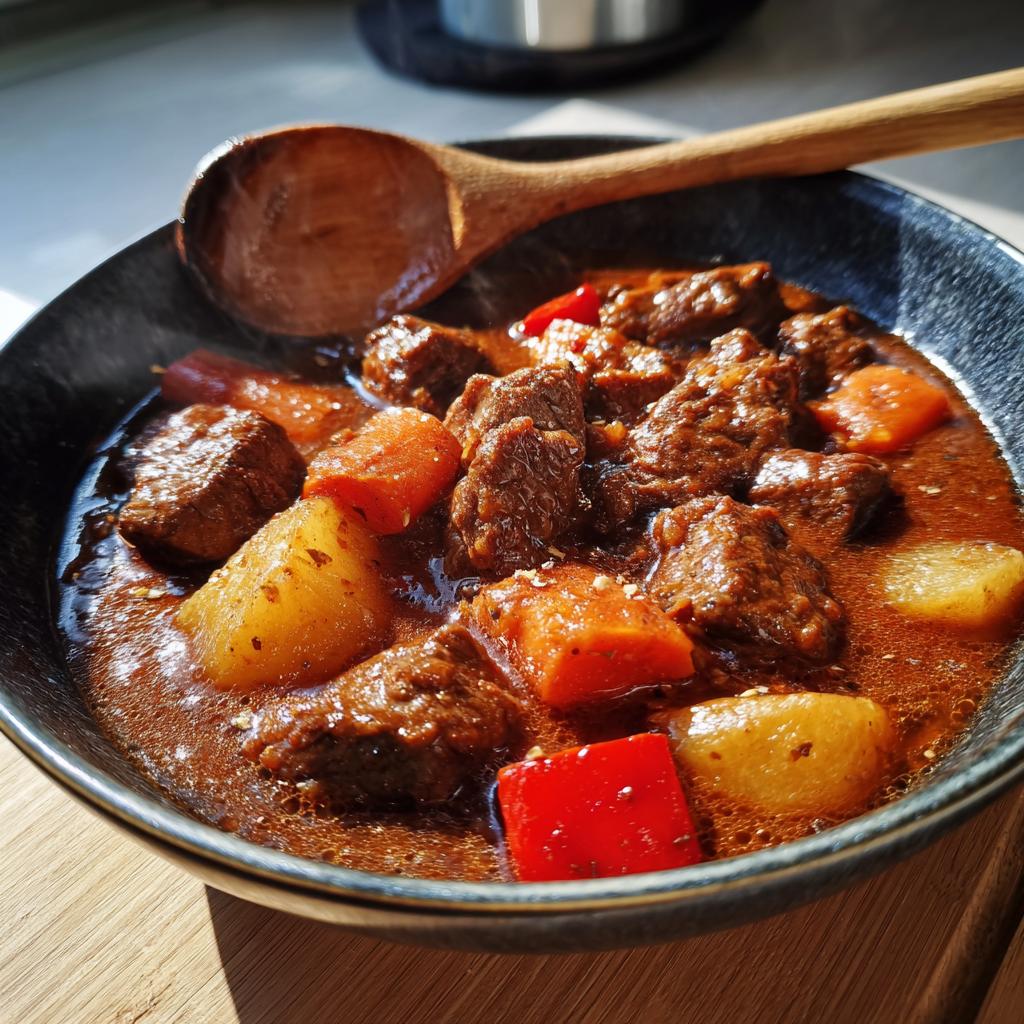
Now the fun part! Return all the beef to the pot and stir in the paprika, caraway seeds, salt, and pepper. The spices should coat everything beautifully. Add the bell pepper, carrots, and potatoes – I love how colorful it looks at this stage. Pour in the beef broth and tomato paste, scraping up all those delicious browned bits from the bottom. Bring it to a gentle bubble, then reduce the heat to low, cover, and let it work its magic for 1.5 to 2 hours. The meat should be fork-tender when done – test a piece at 90 minutes to check. Stir occasionally and add a splash of water if it’s reducing too much.
Pro tip: Resist the urge to peek too often! That steady, low heat is what transforms tough beef into melt-in-your-mouth perfection.
Tips for the Best German Goulash
After making this recipe more times than I can count, I’ve picked up some game-changing tricks that’ll take your goulash from good to oh-my-goodness amazing:
- Fresh paprika is key: That dusty old tin in your spice rack won’t cut it. Buy new Hungarian sweet paprika – the vibrant red color tells you it’s still packed with flavor.
- Deglaze like a pro: After browning the beef, splash in a little broth and scrape up those browned bits before adding everything else. That’s where the deep flavor lives!
- Low and slow wins: If your simmer’s too vigorous, the meat toughens. Keep it at a gentle bubble – you should just see occasional breaks in the surface.
- Taste as you go: Adjust salt and pepper at the end. The flavors concentrate as it cooks, so go easy at first.
Follow these, and you’ll have goulash worthy of a Bavarian grandma’s approval!
Serving Suggestions
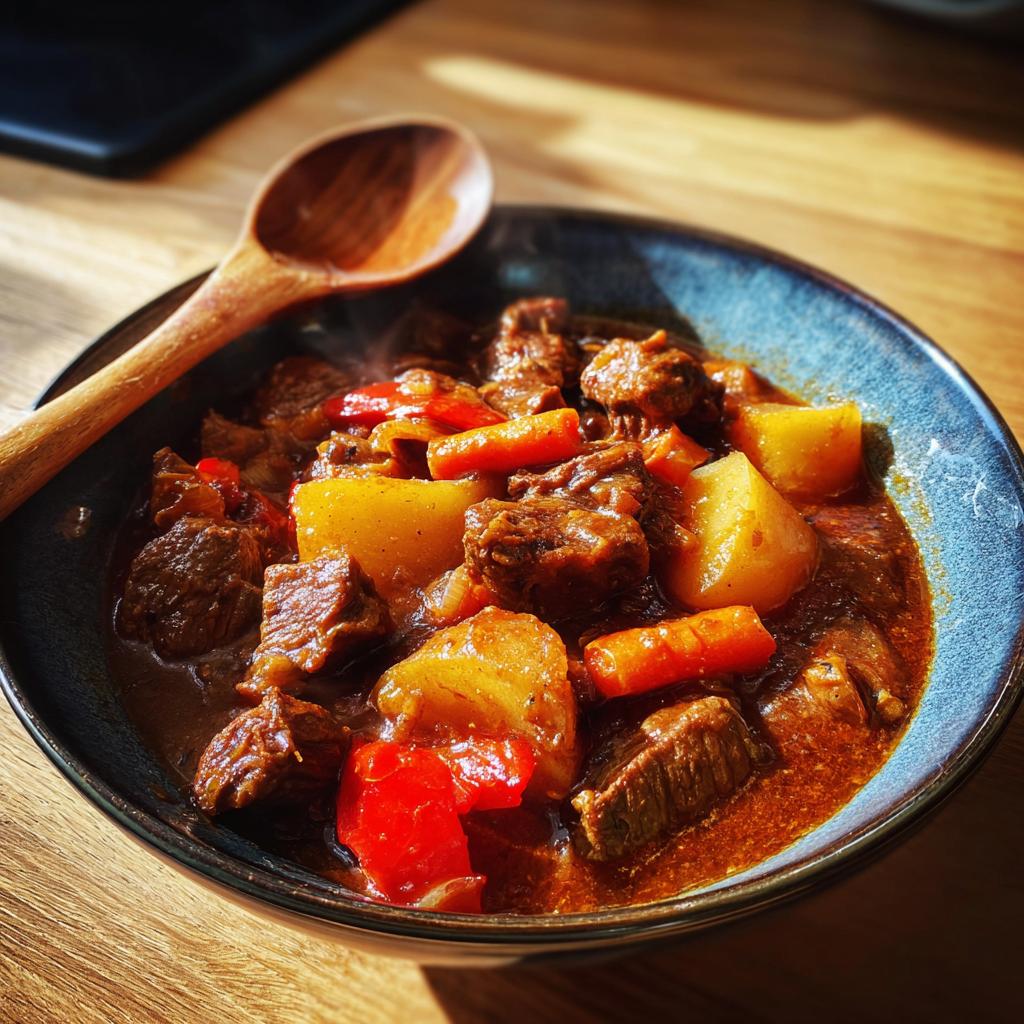
Oh, let me tell you how I love to serve this goulash! A big, crusty loaf of German-style bread is my go-to for sopping up every last drop of that rich sauce. But if you want the real deal, try it with spätzle (those delightful egg noodles) or soft bread dumplings – just like they do in Bavaria. A simple green salad with a vinegary dressing cuts through the richness perfectly. And don’t forget the beer! A malty dunkel lager makes the ultimate pairing for this hearty dish.
Storing and Reheating German Goulash
Here’s the beautiful thing about goulash – it actually gets better as it sits! Let it cool completely, then tuck it into an airtight container in the fridge for up to 3 days (if it lasts that long). When reheating, go low and slow – either on the stovetop over medium-low heat with a splash of broth to loosen it up, or in 30-second bursts in the microwave, stirring between each. The flavors will have melded into something even more magical by day two – if anything, I think leftovers might be the best part!
German Goulash Variations
While I’m partial to the classic beef version, don’t be afraid to make this goulash your own! Sometimes I’ll swap in pork shoulder when beef prices are high – it gets just as tender. Mushroom lovers can add a handful of creminis with the other veggies. For a smoky twist, stir in a teaspoon of smoked paprika with the regular. The beauty of goulash is how forgiving it is – as long as you keep that paprika-forward flavor base, you can’t go wrong!
Nutritional Information
Now, I’m no nutritionist, but here’s the scoop on what’s in this cozy bowl of comfort! Keep in mind these numbers can vary based on your exact ingredients (my grandma always added an extra potato, bless her heart). Per generous serving, you’re looking at roughly 380 calories with a powerhouse 30g of protein – not bad for something that tastes this indulgent! The beef gives you iron, the veggies add fiber, and that rich broth is practically liquid gold. Just don’t ask me to count the “comfort units” – those are off the charts!
Frequently Asked Questions
Over the years, I’ve gotten so many great questions about making German goulash – here are the ones that pop up most often!
Can I make this in a slow cooker?
Absolutely! After browning the beef and sautéing the onions (don’t skip this step – it builds so much flavor), transfer everything to your slow cooker. Cook on LOW for 6-8 hours or HIGH for 3-4 hours. The meat will be fall-apart tender!
How can I thicken my goulash sauce?
If your sauce seems too thin, mix 1 tablespoon cornstarch with 2 tablespoons cold water, then stir it into the bubbling goulash. Let it cook for 2-3 minutes until thickened. Or – my favorite lazy method – just uncover it for the last 30 minutes of cooking to reduce naturally.
What’s the best cut of beef to use?
Chuck roast is perfect – it has just the right amount of marbling to stay juicy during long cooking. I’ve tried fancier cuts, but they actually get stringy while chuck turns buttery soft. Trim off any large fat chunks though!
Can I freeze German goulash?
You bet! It freezes beautifully for up to 3 months. Cool completely, then portion into freezer-safe containers with about an inch of headspace. Thaw overnight in the fridge before reheating gently on the stove.
For more delicious recipes and inspiration, check out our blog and follow us on Pinterest!
Print
How To Make German Goulash That Melts in Your Mouth
- Total Time: 2 hrs 15 mins
- Yield: 6 servings 1x
- Diet: Low Lactose
Description
Learn how to make authentic German goulash with tender beef, rich spices, and hearty vegetables.
Ingredients
- 2 lbs beef chuck, cubed
- 2 onions, chopped
- 2 cloves garlic, minced
- 2 tbsp paprika
- 1 tbsp caraway seeds
- 1 red bell pepper, diced
- 2 carrots, sliced
- 2 potatoes, cubed
- 4 cups beef broth
- 2 tbsp tomato paste
- 2 tbsp vegetable oil
- Salt and pepper to taste
Instructions
- Heat oil in a large pot over medium heat.
- Add onions and garlic, sauté until translucent.
- Add beef cubes and brown on all sides.
- Stir in paprika, caraway seeds, salt, and pepper.
- Add bell pepper, carrots, and potatoes.
- Pour in beef broth and tomato paste.
- Simmer covered for 1.5 to 2 hours until meat is tender.
- Adjust seasoning if needed and serve hot.
Notes
- Use fresh paprika for best flavor.
- Serve with bread or dumplings.
- Refrigerate leftovers for up to 3 days.
- Prep Time: 15 mins
- Cook Time: 2 hrs
- Category: Main Dish
- Method: Stovetop
- Cuisine: German
Nutrition
- Serving Size: 1 bowl
- Calories: 380
- Sugar: 5g
- Sodium: 800mg
- Fat: 18g
- Saturated Fat: 6g
- Unsaturated Fat: 10g
- Trans Fat: 0g
- Carbohydrates: 25g
- Fiber: 4g
- Protein: 30g
- Cholesterol: 90mg